

Biopharmaceuticals
What Are Biopharmaceuticals
Biopharmaceuticals are medicines made from proteins using biotechnology. They are developed through various techniques, such as modifying genes and growing cells, and are used to treat a wide range of diseases. Compared with traditional small-molecule drugs that are made by chemical synthesis, biopharmaceuticals have much more complex structures. For this reason, developing stable and reliable manufacturing processes requires advanced scientific knowledge and specialized technologies.
Japan Pharmaceutical Manufacturers Association (JPMA) (in Japanese)
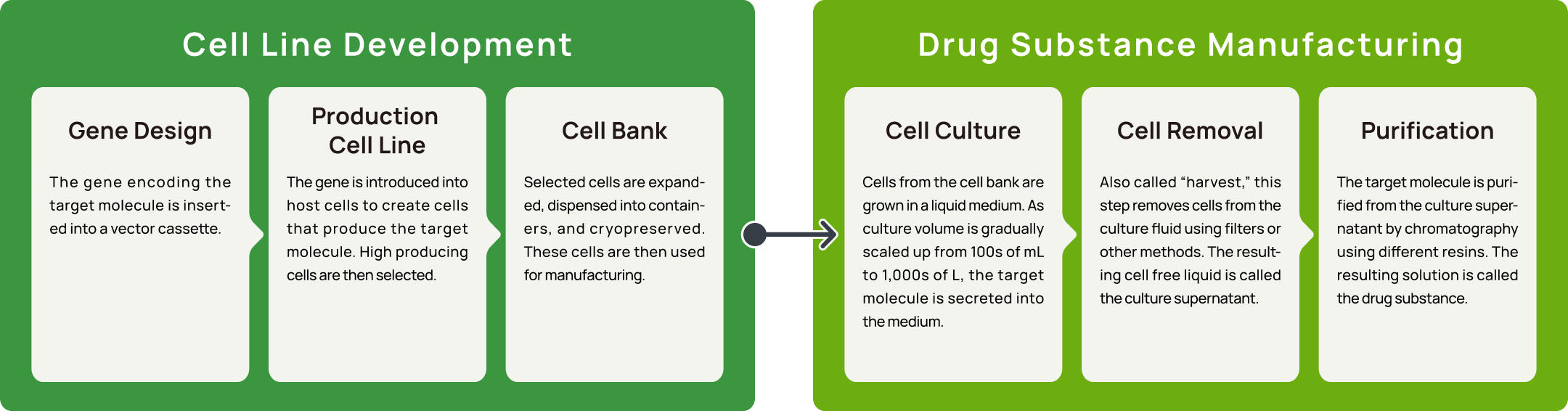
How Biopharmaceuticals Are Developed
Biosimilars
A medicine that has quality, safety, and efficacy equivalent or essentially the same as the reference biopharmaceutical and is developed by a different manufacturer is called a biosimilar (follow-on biologic). Biosimilars are regarded as equivalent to the reference biopharmaceutical in terms of efficacy and safety, and extensive data, including clinical trials, demonstrate that they can be used in the same way as the reference product.